
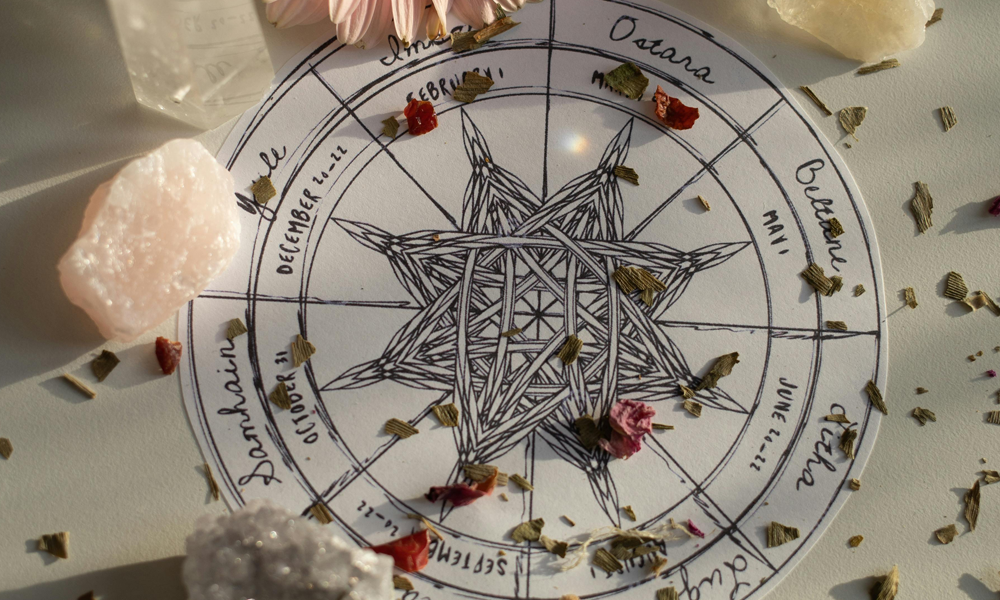
The Wheel of the Year: Sabbats
| Date | Sabbat |
|---|---|
| February 1–2 | Imbolc |
| March 20–21 | Ostara (Spring Equinox) |
| May 1 | Beltane |
| June 20–21 | Litha (Summer Solstice) |
| August 1 | Lughnasadh (Lammas) |
| September 21–23 | Mabon (Autumn Equinox) |
| October 31 | Samhain |
| December 20–23 | Yule (Winter Solstice) |
Imbolc (February 1–2)
Imbolc marks the halfway point between the Winter Solstice and the Spring Equinox. In Celtic tradition, it was a time to honor the goddess Brigid, associated with poetry, smithcraft, and healing. The festival celebrated the first stirrings of spring, when the earliest lambs were born and seeds began to germinate beneath the soil.
In ancient Ireland and Scotland, hearth fires and torches were lit to welcome the returning sun and to honor Brigid’s flame of inspiration. Offerings of milk, butter, and bread were common, reflecting the agricultural roots of the holiday. Wells and springs dedicated to Brigid were also visited for blessings of health and renewal.
Modern pagans and Wiccans celebrate Imbolc with candlelight rituals, home blessings, and symbolic cleansing to sweep away the old and make space for the new. Brigid’s crosses—woven from reeds—are hung in homes as talismans of protection and fertility. Many also use this time for personal dedication or rededication to spiritual paths.
Overall, Imbolc is a festival of hope, purification, and the returning light. It honors both the endurance of winter and the promise of new growth waiting beneath the surface.
Ostara (Spring Equinox, March 20–21)
Ostara is celebrated at the spring equinox, when day and night are equal. Its name is often linked to a Germanic goddess of dawn and fertility, Eostre, from whom some believe the word “Easter” is derived. The holiday emphasizes balance, renewal, and the fertility of the earth as life awakens fully from winter’s grip.
Ancient spring festivals across Europe often involved seed planting, feasts, and rituals for agricultural fertility. Eggs, hares, and seeds were potent symbols of new life, and these continue to be central motifs in seasonal celebrations. The equinox also signaled the beginning of longer days, vital for farming communities.
Modern pagans celebrate Ostara with egg decorating, planting rituals, and altars adorned with flowers, seeds, and symbols of fertility. Many honor the balance of light and dark, using rituals that symbolize harmony between opposing forces. Feasts with seasonal greens, dairy, and breads are also common.
Ostara reminds practitioners of the natural cycles of growth, balance, and rebirth. It is a joyful celebration of renewal and a time to set intentions for the coming season of abundance.
Beltane (May 1)
Beltane is a fire festival rooted in Celtic tradition, marking the beginning of summer. The name derives from “Bel,” meaning bright or shining, and “tene,” meaning fire. Historically, great bonfires were lit to celebrate fertility, vitality, and protection, while livestock were driven between fires for blessings of health.
Traditionally, Beltane was a celebration of union and fertility, both of the land and the people. Rituals often involved dancing around the maypole, a symbol of life force and fertility. Flowers, ribbons, and greenery decorated homes and fields to invite prosperity and vitality.
Modern pagans honor Beltane with maypole dances, bonfires, and handfasting ceremonies (pagan weddings). Altars are decorated with flowers, blossoms, and symbols of fertility. Many see Beltane as a time of joy, passion, and honoring the sacred union of the Goddess and God.
Beltane continues to be one of the most vibrant and joyous festivals, celebrating love, creativity, and the fertility of both the earth and the human spirit.
Litha (Summer Solstice, June 20–21)
Litha marks the longest day of the year, when the sun is at the height of its power. Many ancient cultures celebrated midsummer with fire rituals, feasts, and dances to honor the sun’s life-giving force. Bonfires were believed to protect against evil spirits and ensure abundance for the coming harvest.
In Celtic and Germanic traditions, midsummer was a liminal time when the veil between worlds was thin, and magic was at its most potent. Herbs gathered at this time were considered especially powerful for healing and protection. Rituals often included offerings to nature spirits and blessings for crops.
Modern pagans celebrate Litha with bonfires, flower wreaths, and rituals honoring the sun’s strength. Many honor deities of the sun, light, or fertility. Celebrants often rise early to watch the sunrise, decorate altars with solar symbols, and hold feasts of summer fruits, vegetables, and honey.
Litha represents vitality, abundance, and the peak of life energy. It reminds practitioners to honor the light while acknowledging that the days will soon begin to shorten once again.
Lughnasadh (Lammas, August 1)
Lughnasadh, or Lammas, is the first of the three harvest festivals. Named after the Celtic god Lugh, it was traditionally celebrated with games, feasts, and gatherings to honor both the harvest and community bonds. Bread, grains, and fruits were offered as tokens of gratitude for the land’s abundance.
Historically, the festival involved athletic competitions, craft fairs, and trial marriages, reflecting the celebratory and communal nature of the holiday. Rituals often acknowledged the balance between life and death, as the cutting of the grain symbolized both sustenance and sacrifice.
Modern celebrations include baking bread, feasting, and rituals of thanksgiving. Many pagans decorate altars with grains, fruits, and sunflowers, and offer symbolic “first fruits” of the season. It is also a time of honoring skills, crafts, and the fruits of personal labor.
Lughnasadh emphasizes gratitude, community, and the cyclical nature of life and harvest. It is a reminder to celebrate both the blessings of abundance and the sacrifices that sustain life.
Mabon (Autumn Equinox, September 21–23)
Mabon is the second harvest festival, celebrated at the autumn equinox when day and night are again equal. It is named for a figure in Welsh mythology, Mabon ap Modron, a child of the divine mother. The festival embodies balance, thanksgiving, and preparation for the coming dark season.
Ancient harvest festivals across Europe honored gods and spirits of fertility, while rituals gave thanks for the bounty of the land. Offerings of wine, grains, and fruits were made, and communities gathered to share in the abundance.
Modern pagans celebrate Mabon with feasts, gratitude rituals, and offerings to the earth. Altars may be decorated with apples, gourds, wine, and autumn leaves. It is a time for reflection, balance, and sharing with others, often compared to a pagan “Thanksgiving.”
Mabon reminds practitioners of the cyclical flow of life—light and dark, growth and decline. It honors gratitude, community, and the turning inward as winter approaches.
Samhain (October 31)
Samhain is one of the most significant Celtic festivals, marking the end of the harvest and the beginning of winter. It was considered a time when the veil between the living and the dead was thinnest, allowing ancestors and spirits to cross more easily. Bonfires, feasts, and offerings were central to the celebration.
Traditionally, people left food and drink for wandering spirits and lit candles to guide the dead. Divination was also common, as Samhain was believed to be a potent time for seeing into the future. It was a liminal space between seasons, associated with death, transformation, and renewal.
Modern pagans honor Samhain with ancestor rituals, altars for the dead, and symbolic feasts. Many see it as the Wiccan New Year, a time of endings and beginnings. Rituals often include scrying, tarot readings, and storytelling to connect with ancestral wisdom.
Samhain remains a powerful festival of remembrance, transformation, and honoring the cycles of life and death. It is both solemn and celebratory, recognizing the presence of ancestors while welcoming the descent into the dark season.
Yule (Winter Solstice, December 20–23)
Yule is celebrated at the winter solstice, the longest night of the year. Ancient Norse and Germanic peoples honored the rebirth of the sun during this time, with feasts, fires, and rituals that emphasized light’s return. The Yule log, evergreen trees, and wreaths are all rooted in these traditions.
In pagan belief, Yule marked the battle between the Holly King (who rules the dark half of the year) and the Oak King (who rules the light half). The solstice signaled the turning point when light begins to return, bringing hope for the coming seasons.
Modern pagans celebrate Yule with candle rituals, evergreen decorations, and gift-giving. The Yule log—burned or displayed—is a symbol of protection and renewal. Feasts of hearty winter foods and sharing with family and community remain central.
Yule honors rebirth, renewal, and the eternal cycle of light and dark. It is a time of warmth, generosity, and celebrating the promise of returning life even in the depths of winter.