As the longest night of the year approaches, witches and nature-based practitioners prepare to celebrate…
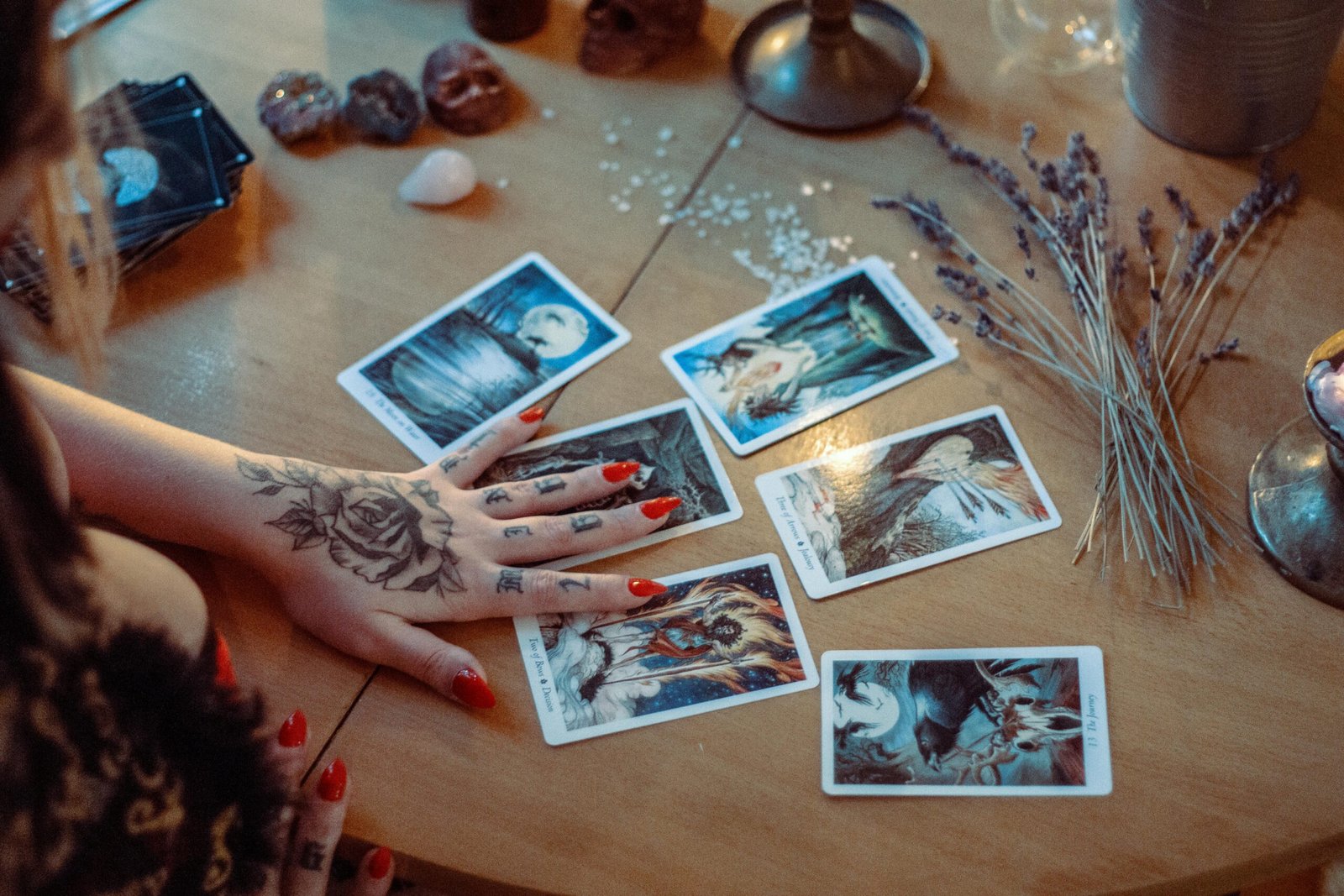
The History of Tarot Reading
From courtly amusement to esoteric tool, the tarot’s path through history reveals shifting cultural needs—play, symbolism, divination, and psychological insight. This post traces that journey and explains how tarot reading became the multi-faceted practice it is today.
Cards as a Pastime: Origins in Europe
The earliest ancestors of modern tarot appear in fifteenth-century Europe, when decorated decks were used primarily as a game. Wealthy patrons in northern Italy commissioned hand-painted decks for social play; these decks were a form of bespoke leisure rather than ritual. Over time, the familiar four suits of common playing cards coexisted alongside a set of trump cards used in trick-taking games. These trump cards evolved into the sequence later called the Major Arcana, a core element of the modern tarot deck.
From Game to Esoterica: The 18th-Century Turn
It was only in the eighteenth century that the deck began to be imagined as a repository of hidden wisdom. French and English antiquarians and mystics reinterpreted the images, asserting exotic origins and deeper meanings. One of the influential figures of this period was Antoine Court de Gébelin, who proposed links between the imagery and ancient civilizations. Though his connections (for example, to Egyptian symbolism and the figure of Hermes Trismegistus) are now regarded as speculative, they reframed the tarot as a symbolic system rather than merely a game. Works like the so-called Book of Thoth entered the occult imagination as touchpoints for deeper arcana.
Occult Revival and Systematization
The nineteenth century’s occult revival consolidated the tarot’s transformation. Secret societies and mystical fraternities wove the cards into broader systems of symbolism, notably integrating them with hermetic and mystical disciplines. The Hermetic Order of the Golden Dawn was particularly important: its members tied tarot imagery to astrology, alchemy, and the Kabbalah, creating correspondences that are still widely used by practitioners.
The Modern Visual Language: Rider–Waite and Beyond
The early twentieth century saw a decisive innovation in tarot imagery. The Rider–Waite tarot deck (1909), designed by Arthur Edward Waite and illustrated by Pamela Colman Smith, made the tarot far more accessible. By giving clear, evocative scenes to the Minor Arcana—cards that had previously been more abstract or pip-based—the deck invited narrative reading and intuitive interpretation. The Rider–Waite visual language shaped much of twentieth-century tarot practice and inspired countless derivative decks.
Tarot as Divination, Psychology, and Practice
Through the twentieth century the tarot branched into several overlapping roles. For some readers it remained primarily a form of divination, a ritual for seeking guidance about future possibilities or hidden dynamics. For others it functioned as a therapeutic mirror: drawing cards prompts reflection, metaphor, and storytelling that can illuminate personal patterns and choices. The deck’s symbolic openness allows a reader to lean either toward predictive folklore or toward psychological inquiry.
Tarot in the Wider Occult and Popular Culture
Tarot’s revival coincided with broader interest in the occult and, later, with the rise of New Spiritualities. During the late twentieth century the cards were adopted by New Age communities as tools for meditation, ritual, and creative work. Simultaneously, tarot readers entered mainstream culture—appearing in literature, film, and in public psychic practice—so that cards now function across ritual, therapeutic, and entertainment spheres.
Why Tarot Endures
The endurance of tarot lies partly in its blend of image, story, and flexibility. The archetypal figures in the Major Arcana echo human stages and dilemmas; the Minor Arcana provide everyday contexts. That layered, symbolic grammar enables readers to approach questions about relationship, career, and inner life through tangible metaphors. Whether one treats tarot as a divinatory method, a meditative prompt, or an art form, its images invite engagement with mystery and meaning.
Using Tarot Today
Contemporary tarot practice emphasizes ethical reading, consent, and context. Many readers encourage querents to treat cards as co-creators of meaning rather than absolute oracles—tools that open conversation with one’s own intuition. Deck diversity has expanded enormously, offering styles that range from historically grounded reconstructions to highly inventive artistic reinterpretations, allowing practitioners to choose images that resonate personally.
From its origins as decorated game cards in Renaissance courts to its place in modern spiritual life, tarot reading has been continually reimagined. Each era adapted the cards to its needs—social, philosophical, spiritual—and in turn the tarot reshaped how people framed questions about fate, choice, and meaning. That mutability is at the heart of tarot’s ongoing appeal: the deck is a mirror, a storybook, and a container for whatever seekers bring to it.
Selected references and further reading: Tarot, playing cards, Major Arcana, Antoine Court de Gébelin, Hermes Trismegistus, Book of Thoth, Hermetic Order of the Golden Dawn, Rider–Waite deck, Arthur Edward Waite, Pamela Colman Smith, Kabbalah, Divination, Occult, New Age.

Related Posts


Comments (0)